
Have you ever wondered how tea became one of the world’s most loved beverages? Millions of people start their mornings with a warm cup of tea, but the story behind its discovery is even more fascinating. Different cultures have their own stories about how tea was discovered, and India has a particularly interesting legend connected with an ancient Buddhist monk.
So, what is the Indian legend regarding the discovery of tea? According to a popular Indian legend, tea was discovered by Bodhidharma, a Buddhist monk who struggled to stay awake during long meditation sessions. After becoming frustrated with his inability to remain alert, he supposedly cut off his eyelids and threw them to the ground. From that spot, tea plants are said to have grown.
The leaves of these plants supposedly helped people remain awake and focused, making them particularly valuable to monks who spent hours meditating.
Although this story is considered a legend rather than established historical fact, it beautifully explains the traditional association between tea, alertness, and spiritual discipline.
Let’s explore this fascinating story, understand its historical background, and discover how tea eventually became an important part of Indian culture.
Understanding the Indian Legend Regarding the Discovery of Tea
The Indian legend regarding the discovery of tea revolves around the life of Bodhidharma, a respected Buddhist monk associated with the spread of Zen Buddhism.
According to the traditional story, Bodhidharma travelled from India to China to spread Buddhist teachings. He believed that meditation required complete concentration, patience, and control over the mind.
However, maintaining concentration for extended periods was not always easy, even for a devoted monk.
The legend explains that his struggle with sleep eventually led to the discovery of a plant whose leaves could help people remain awake.
This story became closely connected with the history of tea and its importance in Buddhist spiritual practices.
The Story of Bodhidharma
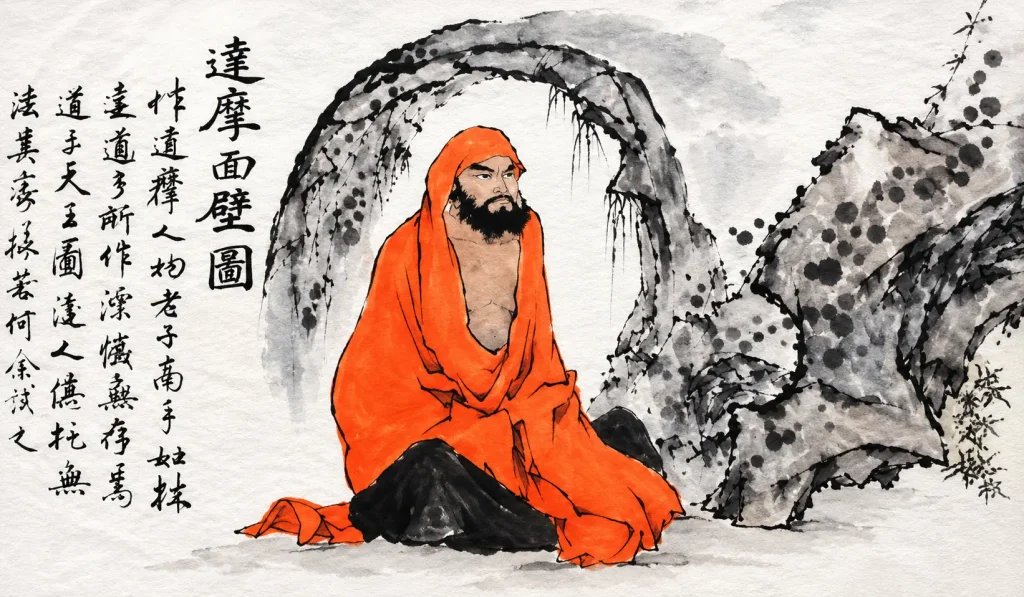
Bodhidharma is traditionally described as an Indian Buddhist monk who travelled to China around the 5th or 6th century.
He is widely associated with the development of Chan Buddhism in China, which later influenced Zen Buddhism in Japan.
According to popular accounts, Bodhidharma was deeply committed to meditation. He believed that spiritual enlightenment required discipline and the ability to overcome physical distractions.
Sleep was one of the biggest obstacles in his meditation practice.
The tea legend developed around this struggle, presenting Bodhidharma as the figure responsible for discovering the stimulating properties of tea leaves.
Who Was Bodhidharma?
Bodhidharma is an important figure in Buddhist tradition. Although many details about his early life remain uncertain, he is commonly believed to have originated in India before travelling to China.
He is particularly remembered for emphasizing meditation as a path toward understanding the true nature of the mind.
His teachings encouraged practitioners to look beyond ordinary distractions and develop deeper awareness.
Because tea became associated with Buddhist meditation, Bodhidharma’s name eventually became connected with one of the most memorable legends about its discovery.
How Did Bodhidharma Discover Tea?
The traditional story describes a moment of frustration that supposedly changed the history of tea.
Bodhidharma wanted to meditate without interruption, but his body repeatedly demanded sleep. Instead of accepting this physical weakness, he supposedly took a dramatic step to overcome it.
Let’s look at the main events of the legend.
The Nine Years of Meditation
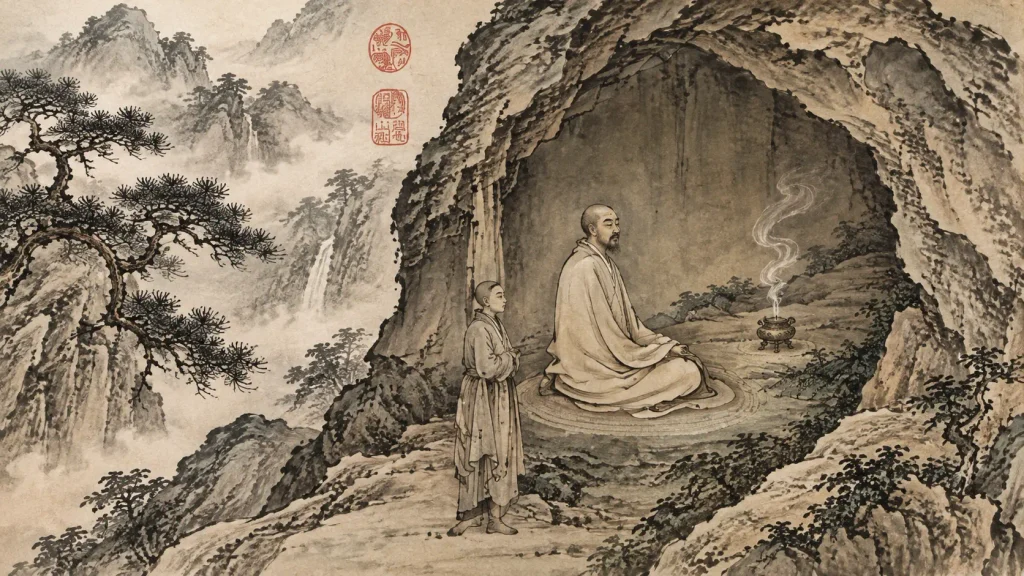
According to popular Buddhist folklore, Bodhidharma once undertook an extraordinary meditation practice lasting nine years.
He sat facing a wall inside a cave, concentrating deeply and attempting to achieve spiritual enlightenment.
Imagine sitting in one position for hours, days, and even years while trying to maintain complete mental awareness. It sounds almost impossible, doesn’t it?
During this long period of meditation, Bodhidharma supposedly struggled with exhaustion and repeatedly fell asleep.
For someone who considered meditation the foundation of spiritual progress, falling asleep was a serious disappointment.
The legend suggests that his determination to overcome this problem eventually resulted in the discovery of tea.
The Legend of His Fallen Eyelids
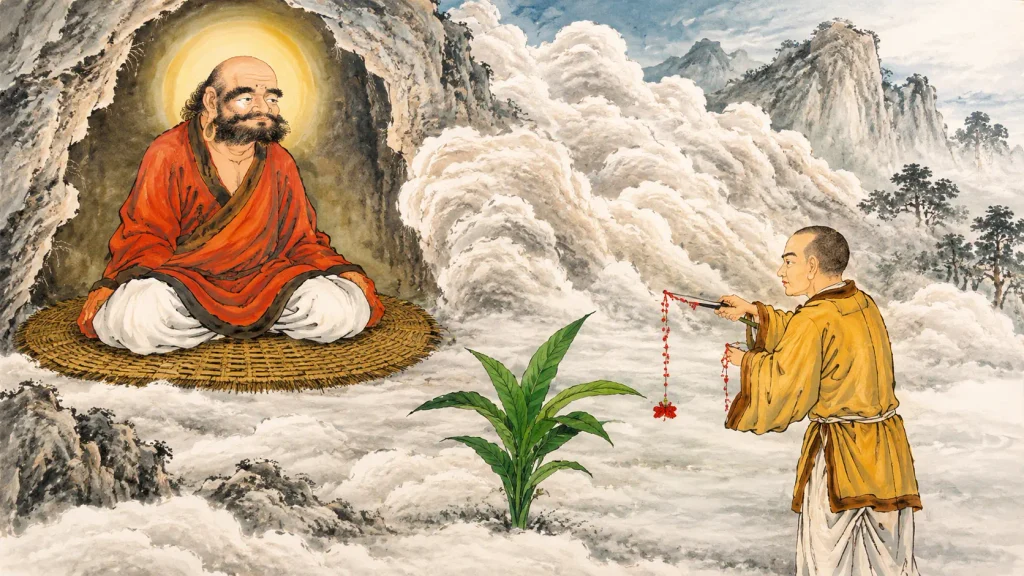
This is the most famous and unusual part of the Indian tea discovery legend.
According to the story, Bodhidharma became extremely angry with himself after falling asleep during meditation.
He believed his eyelids were responsible for allowing sleep to interrupt his spiritual practice.
In a dramatic act of frustration, he supposedly cut off his eyelids and threw them onto the ground.
Although this sounds shocking, remember that the story is symbolic folklore rather than a verified historical event.
The legend continues by explaining that something extraordinary happened where his eyelids landed.
How Tea Plants Supposedly Grew
According to the legend, tea plants began growing from the ground where Bodhidharma had thrown his eyelids.
These plants had special leaves that could help people stay awake and maintain concentration.
When Bodhidharma discovered their properties, he supposedly began using the leaves to prevent sleep during meditation.
Other Buddhist monks eventually learned about the plant and started using its leaves for the same purpose.
Over time, tea became associated with meditation, mindfulness, and spiritual discipline.
This unusual explanation became one of the most memorable stories about the origin of tea.
Why Is Tea Connected With Meditation and Spiritual Awakening?
Tea and meditation have shared a long cultural connection, particularly in Buddhist traditions.
The reason is relatively simple: meditation requires concentration, and tea contains caffeine, a natural stimulant that can temporarily increase alertness.
For monks who spent long periods meditating, drinking tea offered a practical way to remain awake.
However, tea was not valued only for its stimulating effects. Its preparation and consumption also developed into meaningful cultural practices.
Tea as a Symbol of Alertness
Tea is often associated with freshness, awareness, and mental clarity.
Unlike the heavy feeling that sometimes follows a large meal, a cup of tea can provide a gentle stimulating effect.
This made it particularly useful for people who needed to remain attentive for extended periods.
In Buddhist communities, tea gradually became connected with the idea of maintaining awareness during meditation.
The Indian legend of Bodhidharma reflects this association by presenting tea as a natural gift that helps people overcome sleepiness.
The Connection Between Tea and Buddhist Monks
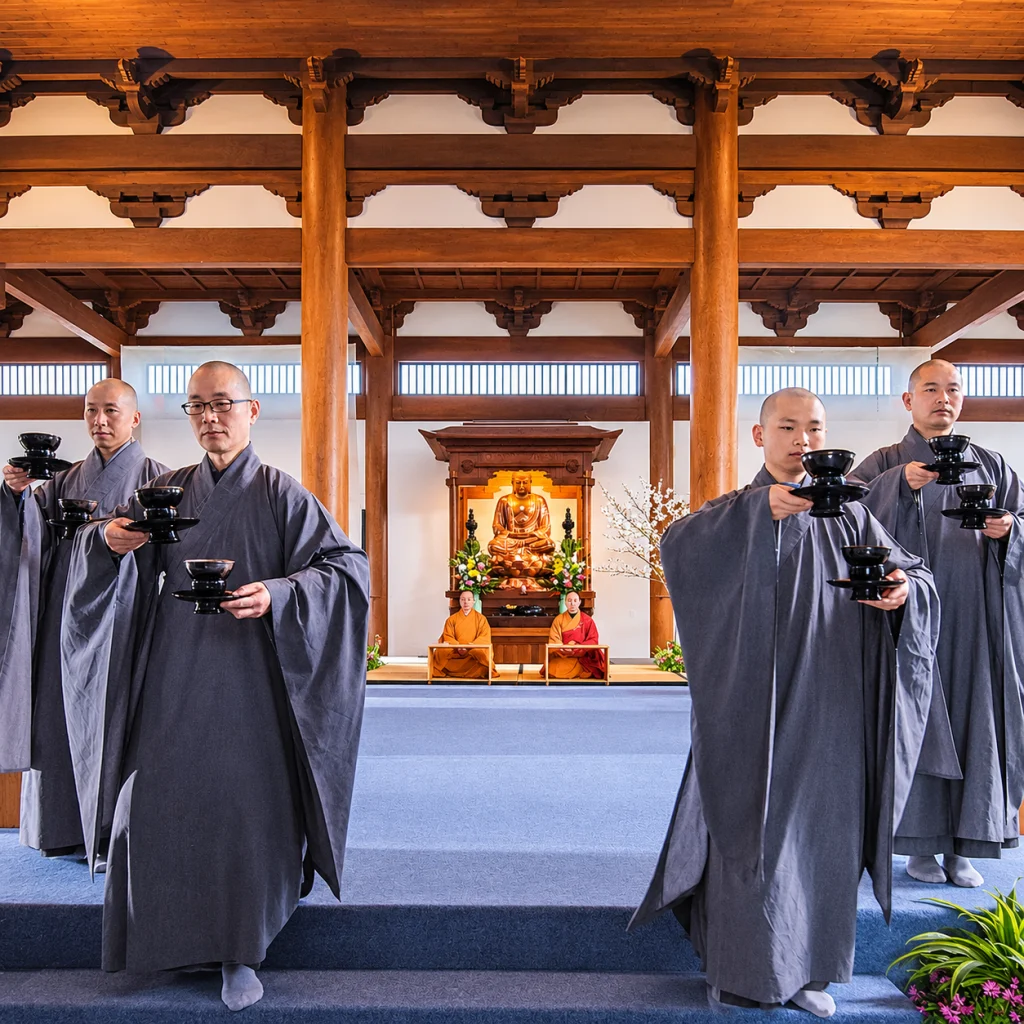
Buddhist monks played an important role in developing tea-drinking traditions across East Asia.
Tea became a familiar part of monastic life because it helped monks remain alert during religious activities and meditation.
In China, tea eventually developed into an important cultural practice.
Japanese Buddhist monks later helped introduce and popularize tea traditions in Japan, where tea drinking became closely connected with Zen practices and the Japanese tea ceremony.
Therefore, the connection between tea and Buddhism extends beyond the legend of Bodhidharma. It also reflects the practical and cultural importance of tea in religious communities.
Is the Indian Tea Discovery Legend Historically True?
Now that we know the story, an important question remains: Did Bodhidharma really discover tea?
The honest answer is that there is no reliable historical evidence proving that he discovered the tea plant or created it through the legendary incident involving his eyelids.
The story is best understood as folklore that explains the relationship between tea, wakefulness, and meditation.
Legend Versus Historical Evidence
There is a difference between a cultural legend and documented history.
The Bodhidharma story is an example of how traditional storytelling explains the origins of something important.
Historical evidence, however, suggests that tea was already being consumed in China long before the period traditionally associated with Bodhidharma.
Tea has a much older history than the popular legend might suggest.
Ancient Chinese records and traditions describe tea consumption and cultivation developing over many centuries.
This means that Bodhidharma should be understood as a legendary figure connected with tea rather than its historically established discoverer.
The Historical Origins of Tea in China
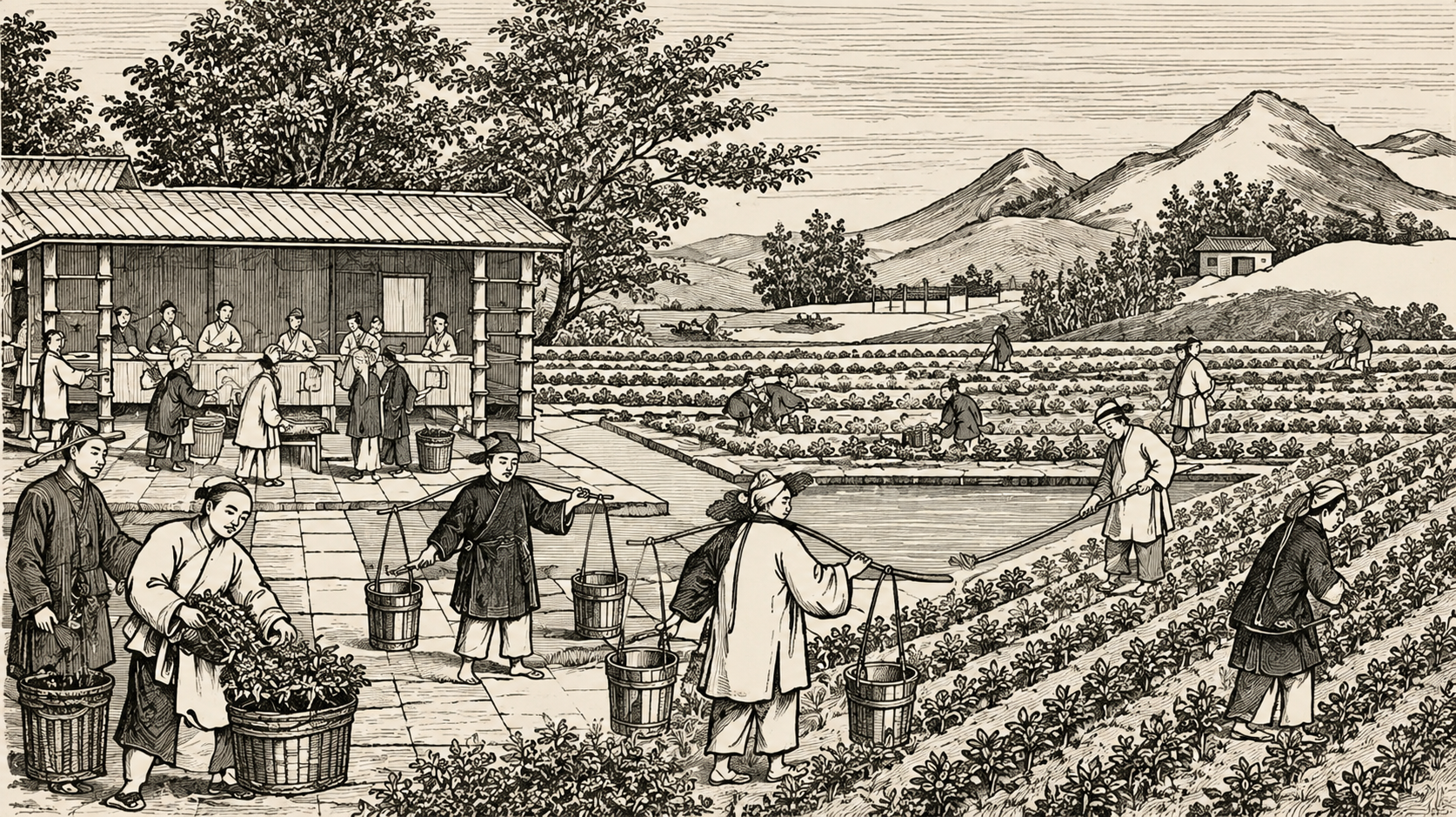
Although India has its own fascinating tea legend, China is generally recognized as the earliest documented centre of tea consumption and cultivation.
Tea drinking became increasingly popular in China during the Tang dynasty (618–907 CE).
The Chinese scholar Lu Yu wrote The Classic of Tea during the 8th century. This important work described tea cultivation, preparation, and appreciation.
Over the centuries, tea spread to other parts of Asia through trade, travel, and cultural exchange.
Eventually, it became one of the world’s most widely consumed beverages.
How Did Tea Become Popular in India?
India has a special relationship with tea today, but its widespread commercial tea industry developed much later than the ancient legends.
Although wild tea plants existed in parts of northeastern India, large-scale commercial cultivation expanded significantly during British colonial rule.
The Role of the British East India Company
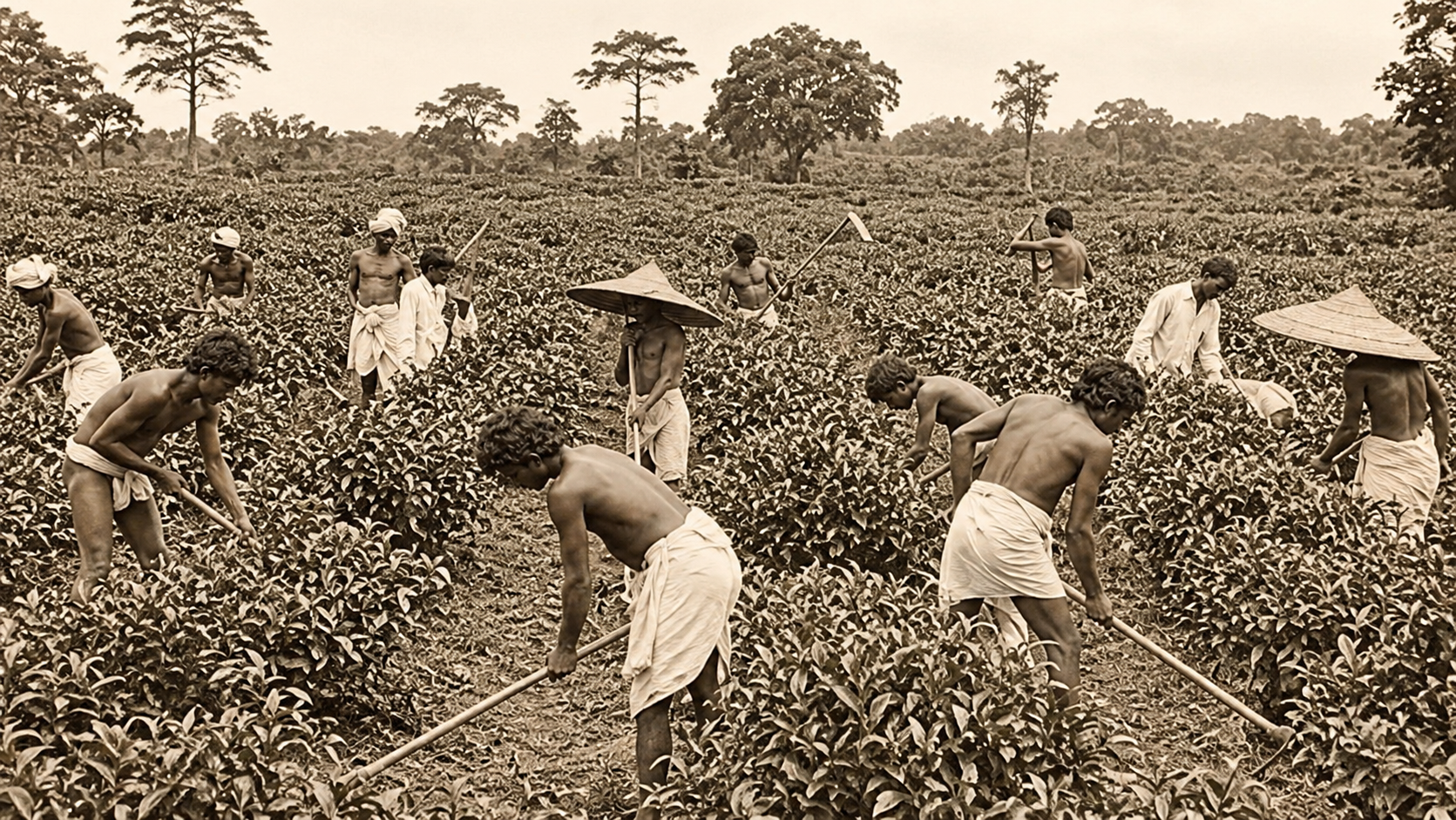
During the 19th century, the British East India Company became interested in developing tea cultivation in India.
At that time, Britain imported large quantities of tea from China.
To reduce its dependence on Chinese supplies, British interests began exploring opportunities to establish tea plantations in India.
Researchers and colonial administrators investigated tea plants growing in northeastern India.
This eventually encouraged the commercial development of tea plantations, particularly in Assam.
The Development of Assam Tea

Assam played a major role in the growth of India’s tea industry.
In the early 19th century, indigenous tea plants belonging to the Camellia sinensis var. assamica variety were identified in the region.
The discovery helped establish Assam as an important tea-producing area.
Commercial plantations expanded during the 1830s, and Assam gradually became famous for its strong, rich, and full-bodied black tea.
Today, Assam tea is enjoyed both in India and internationally.
The Growth of Darjeeling Tea
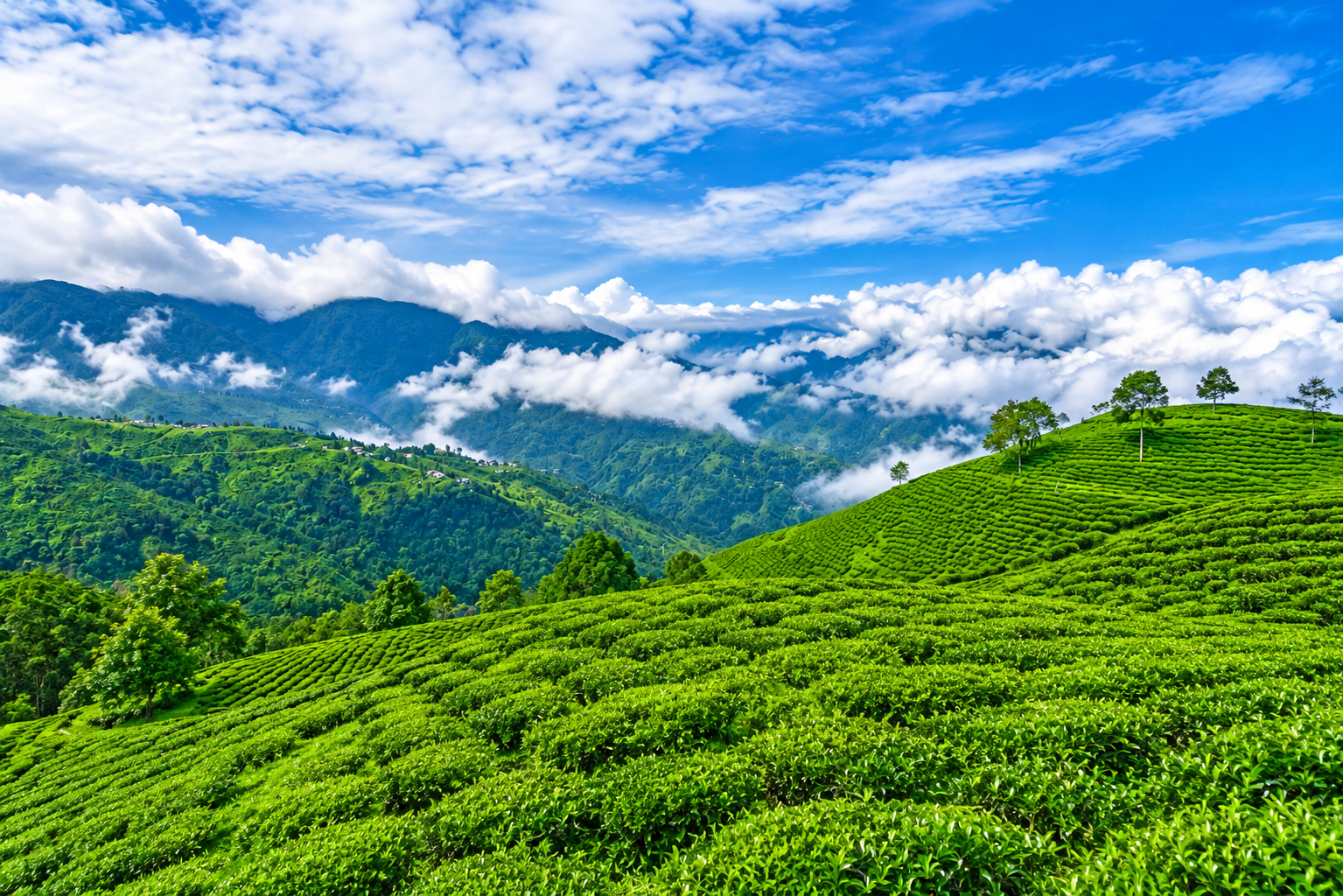
Another important chapter in Indian tea history is the development of Darjeeling tea.
Located in the Himalayan foothills of West Bengal, Darjeeling became famous for its distinctive tea grown at high elevations.
Its cool climate, mountainous landscape, and unique growing conditions contribute to its delicate aroma and flavour.
Darjeeling tea is sometimes called the champagne of teas because of its distinctive character and international reputation.
Together, Assam and Darjeeling helped establish India as one of the world’s most important tea-producing countries.
The Importance of Tea in Indian Culture
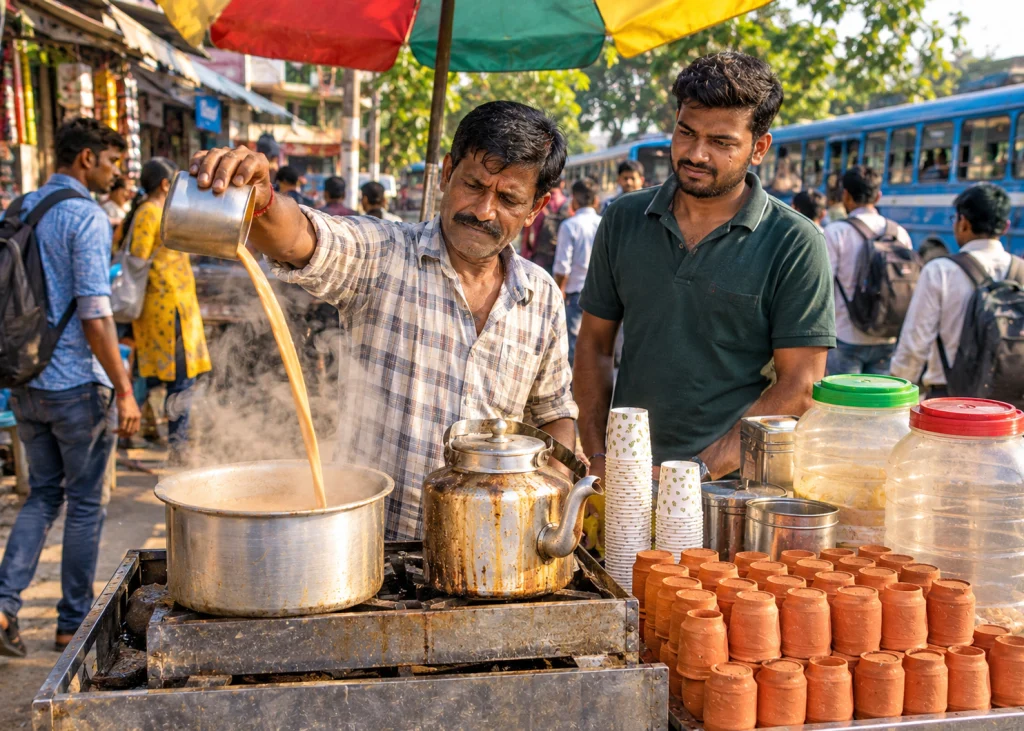
Tea is much more than a beverage in India. It represents hospitality, friendship, comfort, and everyday social connection.
From busy railway stations to small roadside tea stalls, chai can be found almost everywhere.
For many Indians, the day does not feel complete without a warm cup of tea.
Unlike the traditional tea practices associated with meditation, Indian chai is often prepared with milk, sugar, and spices such as ginger, cardamom, and cinnamon.
Every region and household may have its own special recipe.
Chai as a Part of Everyday Indian Life
Indian chai has become an essential part of everyday routines.
People enjoy it in the morning before starting work, during afternoon breaks, and while spending time with family and friends.
At offices, tea breaks provide opportunities for colleagues to relax and talk.
At home, offering tea to guests is a common expression of hospitality.
Street-side chai vendors also create social spaces where strangers become familiar faces through everyday conversations.
This is one reason tea has such a strong cultural identity in India.
The Cultural Significance of Sharing Tea
Sharing tea is often about more than enjoying its flavour.
It creates opportunities for people to connect, discuss their lives, and build relationships.
Think about a conversation between old friends or a family gathering on a rainy afternoon. A cup of hot chai often makes the moment feel more welcoming.
In this way, tea has become part of India’s social identity.
The ancient Indian legend explains tea through spirituality and meditation, while modern Indian culture celebrates it through hospitality and togetherness.
Interesting Facts About the Indian Legend of Tea
Here are some interesting facts that make the story of tea even more fascinating:
- Bodhidharma is associated with Zen Buddhism: He is traditionally regarded as an important figure in the development of Chan Buddhism in China.
- The eyelid story is symbolic: The story represents the struggle against sleep and the desire to maintain spiritual awareness.
- Tea contains natural caffeine: This explains why tea can help people feel more awake and attentive.
- China has the earliest documented tea traditions: Tea consumption in China predates the popular Bodhidharma legend.
- Assam is famous for indigenous tea plants: The region played an important role in establishing India’s commercial tea industry.
- India is famous for masala chai: Milk, sugar, and aromatic spices give Indian tea its distinctive flavour.
- Tea has spiritual and social significance: Across different cultures, tea has become associated with meditation, hospitality, and relaxation.
These facts show how a simple drink became connected with religion, history, agriculture, and everyday life.
Conclusion
So, what is the Indian legend regarding the discovery of tea? According to the popular legend, Bodhidharma, an Indian Buddhist monk, struggled to remain awake during his long meditation sessions. After becoming frustrated with his sleepiness, he supposedly cut off his eyelids and threw them onto the ground. Tea plants then grew from that spot, and their leaves helped monks stay awake and focused during meditation.
Although historians do not consider this story a proven account of tea’s discovery, it remains an interesting part of tea folklore.
The actual history of tea is much older and closely connected with China, while India’s commercial tea industry developed significantly during the 19th century.
Today, tea has become an important part of Indian identity. Whether enjoyed as a traditional cup of chai, a refreshing morning drink, or a comforting beverage shared with friends, tea continues to bring people together.
Perhaps that is the most beautiful part of its story: a simple leaf has become a symbol of awareness, comfort, and connection across generations.
FAQs
Q1. Who discovered tea according to Indian legend?
According to the popular Indian legend, Bodhidharma, an Indian Buddhist monk, discovered tea. The story claims that tea plants grew where he threw his eyelids after becoming frustrated with falling asleep during meditation.
Q2. What happened to Bodhidharma’s eyelids?
According to the legend, Bodhidharma cut off his eyelids and threw them onto the ground because he wanted to prevent himself from falling asleep during meditation. Tea plants supposedly grew from that spot, and their leaves helped people remain awake.
Q3. Did tea originally come from India or China?
China has the earliest well-documented history of tea consumption and cultivation. However, India also has a long association with tea plants, particularly in northeastern regions such as Assam, where indigenous tea varieties grow naturally.
Q4. Why did Buddhist monks drink tea?
Buddhist monks traditionally drank tea because its natural caffeine content helped them remain awake and attentive during long meditation sessions. Tea also became an important part of Buddhist culture and spiritual practices.
Q5. When did tea become popular in India?
Tea cultivation expanded commercially in India during the 19th century under British colonial rule. Assam became one of the earliest major tea-producing regions, followed by Darjeeling and other growing areas. Tea eventually became a popular everyday beverage throughout India.