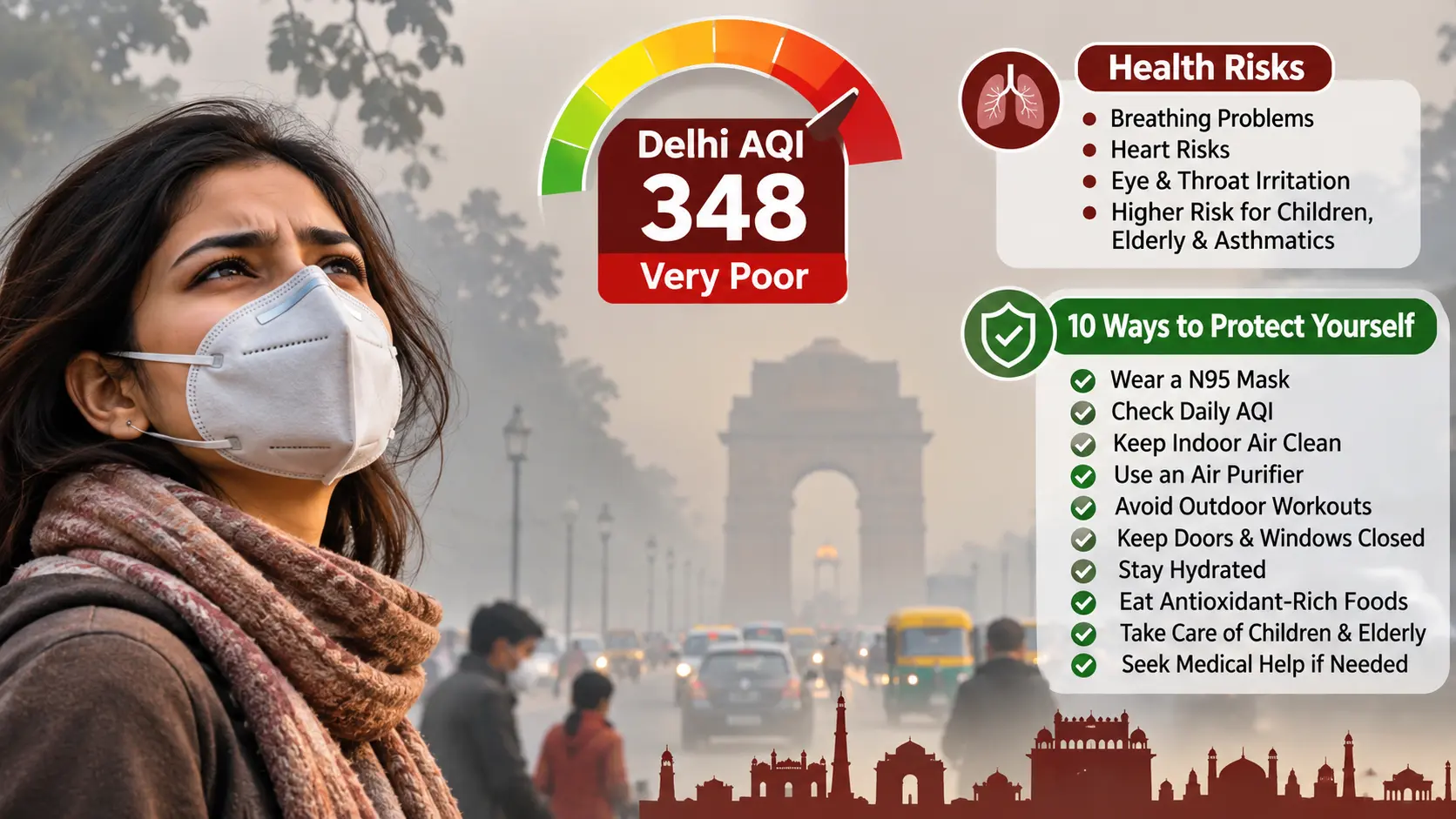
Delhi is once again facing serious air quality concerns, reminding residents how challenging it can be to breathe comfortably during the winter pollution season. On November 14, 2026, Delhi’s Air Quality Index (AQI) reportedly reached 348, according to a report by The Indian Express. This reading highlights the importance of understanding air pollution and taking practical steps to protect our health.
For people living in Delhi and nearby areas, including Noida, Gurugram, Ghaziabad, and Faridabad, poor air quality can become a part of everyday life during certain months. From morning walks to school journeys and daily office commutes, outdoor activities may expose people to harmful airborne particles.
But what does an AQI of 348 actually mean? Why does pollution become worse during winter? And more importantly, what can you do to protect yourself and your family?
Let’s explore everything you need to know about Delhi Air Pollution 2026, including its causes, health effects, and ten practical ways to reduce your exposure.
1. Introduction: Understanding Delhi Air Pollution 2026
Air pollution is more than just a layer of smoke or dust covering the city. It is a mixture of gases, microscopic particles, and other pollutants that can enter the respiratory system when we breathe.
Delhi frequently experiences poor air quality, particularly during the colder months. Weather conditions, vehicle emissions, construction activities, industrial pollution, and regional agricultural burning can contribute to the problem.
One of the biggest concerns is PM2.5, a type of particulate matter that is so small it can travel deep into the lungs. Long-term exposure to fine particles is associated with respiratory and cardiovascular diseases.
For residents, this means that protecting their health requires more than simply avoiding visible smoke. Even when the air looks relatively clear, harmful pollutants may still be present.
2. What Does an AQI of 348 Mean?
The Air Quality Index, commonly called AQI, is a measurement system that helps people understand how polluted the air is.
Instead of requiring everyone to understand complicated pollution measurements, AQI converts air quality information into a number and a corresponding category.
Understanding the Air Quality Index
India’s National Air Quality Index uses the following categories:
| AQI Range | Air Quality Category |
|---|---|
| 0–50 | Good |
| 51–100 | Satisfactory |
| 101–200 | Moderate |
| 201–300 | Poor |
| 301–400 | Very Poor |
| 401–500 | Severe |
An AQI of 348 falls into the Very Poor category under India’s AQI system.
Why Is AQI 348 a Serious Concern?
At this pollution level, prolonged exposure can cause respiratory discomfort and increase health risks, particularly for people with asthma, lung conditions, or heart disease.
Healthy individuals may also experience irritation, coughing, or breathing discomfort.
AQI readings can change throughout the day. Pollution levels may vary between neighbourhoods depending on traffic, industrial activity, weather, and other local conditions.
3. Why Is Delhi Experiencing Severe Air Pollution?
Delhi’s pollution problem has no single cause. It develops through a combination of local emissions, regional pollution sources, and weather conditions.
Vehicle Emissions
Traffic is a major contributor to urban air pollution. Cars, buses, motorcycles, trucks, and other vehicles release pollutants through fuel combustion.
Traffic congestion makes the problem worse because vehicles may spend long periods running at low speeds or idling.
Diesel-powered vehicles can also release particulate matter and nitrogen oxides, which affect air quality.
Construction Dust and Road Pollution
Construction projects, road repairs, demolition activities, and uncovered building materials can release large quantities of dust.
Road dust can also become airborne when vehicles move over dry and dusty surfaces.
These particles may irritate the eyes, nose, and respiratory system.
Industrial Emissions
Factories, power generation facilities, and other industrial operations can release pollutants into the atmosphere.
The type and quantity of emissions depend on the industrial process, fuel used, pollution-control equipment, and operating conditions.
Seasonal Factors and Crop Residue Burning
Winter weather can make Delhi’s pollution situation worse.
During colder months, low wind speeds and atmospheric conditions can prevent pollutants from dispersing efficiently.
Crop residue burning in parts of northern India can also contribute to regional pollution episodes, although its contribution varies depending on weather and location.
4. Major Health Risks of Delhi Air Pollution
Air pollution can affect different parts of the body. While some symptoms appear quickly, other health effects may develop after repeated or prolonged exposure.
Respiratory Problems
The lungs are among the first organs affected by polluted air.
Fine particles can travel deep into the respiratory system, causing irritation and inflammation.
People may experience:
- Coughing and throat irritation.
- Shortness of breath.
- Wheezing.
- Increased asthma symptoms.
- Chest discomfort.
People with existing respiratory conditions may be particularly vulnerable.
Heart Health and Cardiovascular Risks
Air pollution is not only a lung-related concern.
Fine particulate matter can contribute to inflammation and other biological changes associated with cardiovascular problems.
Long-term exposure is linked with an increased risk of heart disease and stroke.
People with existing heart conditions should take pollution advisories seriously.
Effects on Children and Older Adults
Children’s respiratory systems are still developing, and they often spend time playing outdoors.
Older adults may have reduced lung capacity or existing health conditions that make them more sensitive to polluted air.
Both groups should limit unnecessary outdoor exposure during periods of very poor air quality.
Long-Term Health Consequences
Repeated exposure to air pollution over months and years can increase the risk of chronic respiratory diseases and cardiovascular conditions.
This is why pollution protection should not be treated as a temporary winter activity. Maintaining cleaner indoor environments and reducing exposure throughout the year are important steps.
5. Common Symptoms of Poor Air Quality
Not everyone responds to pollution in the same way. However, some common symptoms include:
- Dry or irritated eyes.
- Frequent coughing.
- Sneezing and throat irritation.
- Headaches.
- Chest tightness.
- Difficulty breathing.
- Worsening asthma symptoms.
- Unusual tiredness during outdoor activities.
These symptoms do not automatically mean air pollution is the cause. If they persist, become severe, or interfere with daily activities, consult a healthcare professional.
6. 10 Ways to Protect Yourself from Delhi Air Pollution
You cannot control the air outside your home, but you can take several steps to reduce your personal exposure.
Here are ten practical measures worth following.
1. Wear a Properly Fitted N95 Mask
A properly fitted N95 respirator can filter a high proportion of airborne particles when worn correctly.
It can be particularly useful when travelling outdoors during periods of high pollution.
Make sure the mask fits closely around your nose and mouth. Air should not leak significantly around the edges.
Ordinary cloth masks and loose-fitting fashion masks may not provide equivalent protection against fine particulate matter.
2. Check the AQI Before Going Outside
Make checking the air quality part of your daily routine.
Before going for a walk, travelling to work, or allowing children to play outside, check the latest AQI.
You can use official resources such as:
- CPCB (Central Pollution Control Board).
- SAMEER air quality app.
- Government air quality monitoring websites.
If pollution levels are very high, consider postponing unnecessary outdoor activities.
3. Avoid Outdoor Exercise During High Pollution
Exercise is important for good health, but exercising in heavily polluted air may increase the amount of pollutants you inhale.
When air quality is very poor, avoid running, cycling, or intense outdoor workouts.
Instead, consider indoor stretching, yoga, or light exercises in a clean and well-ventilated indoor environment.
4. Keep Windows Closed During Severe Pollution
Opening windows during a heavily polluted period may allow outdoor pollutants to enter your home.
Keep windows and doors closed when outdoor air quality is particularly poor, especially during nearby traffic congestion or visible pollution events.
However, indoor ventilation is still important. Ventilate your home when outdoor air quality improves.
5. Use an Air Purifier Indoors
An air purifier with a suitable HEPA filter can help reduce airborne particles inside your home.
When choosing an air purifier, consider:
- Room size.
- Clean Air Delivery Rate (CADR).
- HEPA filtration.
- Filter replacement costs.
- Noise levels.
- Energy consumption.
Choose a model appropriate for the room where you spend the most time.
Remember that air purifiers reduce particles but do not necessarily remove every gaseous pollutant.
6. Keep Your Home Clean and Dust-Free
Dust can accumulate on furniture, floors, curtains, and other surfaces.
Regular cleaning can help prevent indoor dust from becoming airborne.
Try these simple habits:
- Use a damp cloth to clean furniture.
- Mop floors regularly.
- Wash bedding frequently.
- Avoid dry sweeping when possible.
- Clean air purifier filters according to manufacturer instructions.
A cleaner home can make your indoor environment more comfortable.
7. Stay Hydrated and Maintain a Healthy Diet
Drinking enough water supports normal body functions and helps prevent dehydration.
Include a balanced diet containing vegetables, fruits, whole grains, nuts, and protein sources.
Foods rich in vitamins and antioxidants, such as oranges, guavas, berries, spinach, and carrots, can contribute to overall nutritional health.
However, remember that no particular food or drink can detoxify your lungs or cancel out the effects of air pollution.
Reducing exposure remains the most important step.
8. Protect Children and Older Family Members
Families should pay special attention to children, older adults, and people with asthma or heart conditions.
You can help protect them by:
- Keeping outdoor playtime limited during high pollution.
- Checking school and local health advisories.
- Keeping prescribed medicines accessible.
- Maintaining cleaner indoor spaces.
- Avoiding unnecessary outdoor trips.
If a family member experiences breathing difficulties, seek appropriate medical advice.
9. Reduce Indoor Sources of Pollution
Outdoor air pollution is not the only concern. Indoor activities can also release harmful particles and gases.
Cooking smoke, cigarette smoke, incense, candles, and some cleaning products can affect indoor air quality.
To reduce these sources:
- Avoid smoking indoors.
- Use a kitchen exhaust fan while cooking.
- Avoid burning unnecessary materials.
- Store chemicals safely.
- Choose cleaning products carefully.
A cleaner indoor environment is especially important when outdoor pollution levels are high.
10. Follow Official Health Advisories
During severe pollution episodes, government agencies may issue public health advisories and restrictions.
Follow updates from local authorities and official air quality monitoring platforms.
Do not rely entirely on social media posts or forwarded messages, as they may contain outdated or misleading information.
Official guidance can help you understand when outdoor activities should be reduced and what additional precautions may be necessary.
Looking for more informative articles, helpful tips, and the latest updates? Visit ArticleBloom to explore a wide range of content covering Health, Technology, Business, Finance, Celebrity News, and Travel.
7. How to Improve Indoor Air Quality
Your home should be a place where you can reduce exposure to outdoor pollution.
Start by identifying the rooms where your family spends the most time. Bedrooms and living rooms are often good places to prioritise cleaner air.
Consider using a HEPA air purifier, cleaning surfaces with damp materials, and controlling indoor smoke sources.
Avoid assuming that indoor plants alone can clean an entire room. Although plants can improve the appearance of a space, they are not a replacement for effective air filtration.
You should also monitor indoor humidity and avoid excessive moisture, which can encourage mould growth.
Small changes can make your indoor environment more comfortable.
8. Foods That Support Your Body During High Pollution
A balanced diet supports normal immune function and overall health.
During winter, try to include a variety of nutritious foods.
Some useful choices include:
- Citrus fruits: Oranges, lemons, and sweet lime provide vitamin C.
- Green vegetables: Spinach and broccoli provide vitamins and other nutrients.
- Nuts and seeds: Almonds, walnuts, and flaxseeds provide healthy fats.
- Fresh fruits: Guava, apples, and berries contribute dietary fibre and antioxidants.
- Protein-rich foods: Eggs, lentils, beans, and dairy products support normal body functions.
There is no special anti-pollution diet that prevents the effects of polluted air. Nutrition should complement, not replace, exposure-reduction measures.
9. When Should You Seek Medical Help?
Never ignore persistent or severe breathing symptoms.
Seek medical advice if you experience frequent coughing, worsening wheezing, unusual breathlessness, or ongoing chest discomfort.
People with existing asthma or heart disease should follow their prescribed treatment plans and discuss pollution-related precautions with their healthcare providers.
Important health warning
Seek emergency medical assistance if you experience severe difficulty breathing, significant chest pain, fainting, confusion, or blue lips. Do not wait for the symptoms to disappear on their own.
10. What Can Delhi Residents Do to Reduce Air Pollution?
Personal protection is important, but reducing pollution at its source is equally necessary.
Individuals, businesses, communities, and government authorities all have a role to play.
Here are some practical actions that can make a difference:
Use Public Transportation: Metro services, buses, and shared transportation can reduce the number of individual vehicles on the road.
Avoid Unnecessary Vehicle Idling: Switch off your vehicle’s engine when waiting for extended periods.
Support Cleaner Energy: Greater adoption of renewable energy and cleaner fuels can help reduce emissions.
Control Construction Dust: Construction sites should follow dust-control practices and applicable environmental regulations.
Plant and Protect Green Spaces: Trees and green spaces can support healthier urban environments, although they cannot replace emission controls.
Spread Awareness: Share reliable information about air quality and encourage neighbours to follow pollution-reduction practices.
Solving Delhi’s pollution problem requires long-term planning and consistent action rather than relying on temporary measures.
11. Conclusion
Delhi Air Pollution 2026 is an important reminder that clean air is essential for everyone’s health. An AQI reading of 348 falls within India’s Very Poor category and highlights the need for extra precautions, especially for children, older adults, and people with existing respiratory or cardiovascular conditions.
The good news is that you can take meaningful steps to reduce your exposure. Checking the AQI, wearing a properly fitted N95 mask, avoiding strenuous outdoor exercise, using suitable air filtration, and maintaining a cleaner indoor environment are practical ways to protect yourself.
However, individual precautions are only part of the solution. Cleaner transportation, responsible construction practices, industrial emission controls, and stronger environmental awareness are also necessary.
Clean air should not be considered a luxury. It is something every person deserves, and protecting it requires action from all of us.
FAQs
Q1. What does AQI 348 mean in Delhi?
An AQI of 348 falls under the Very Poor category in India’s National Air Quality Index. At this level, prolonged exposure can cause respiratory discomfort and increase health risks, particularly among vulnerable individuals.
Q2. Is it safe to go outside when Delhi’s AQI is 348?
Outdoor exposure should be reduced as much as possible. Avoid strenuous outdoor exercise and unnecessary trips. If you must go outside, consider wearing a properly fitted N95 respirator and follow official health advisories.
Q3. Which mask is best for Delhi air pollution?
A genuine, properly fitted N95 respirator is a suitable option for reducing exposure to airborne particles. Its effectiveness depends on correct fit and consistent use.
Q4. How can I protect my children from air pollution?
Limit outdoor activities when pollution is high, check school advisories, maintain cleaner indoor air, avoid indoor smoke, and consult a healthcare professional if your child develops persistent respiratory symptoms.
Q5. Can an air purifier help during severe air pollution?
Yes. An air purifier with an appropriately sized HEPA filtration system can reduce airborne particles indoors. Choose one according to your room size and maintain its filters regularly.