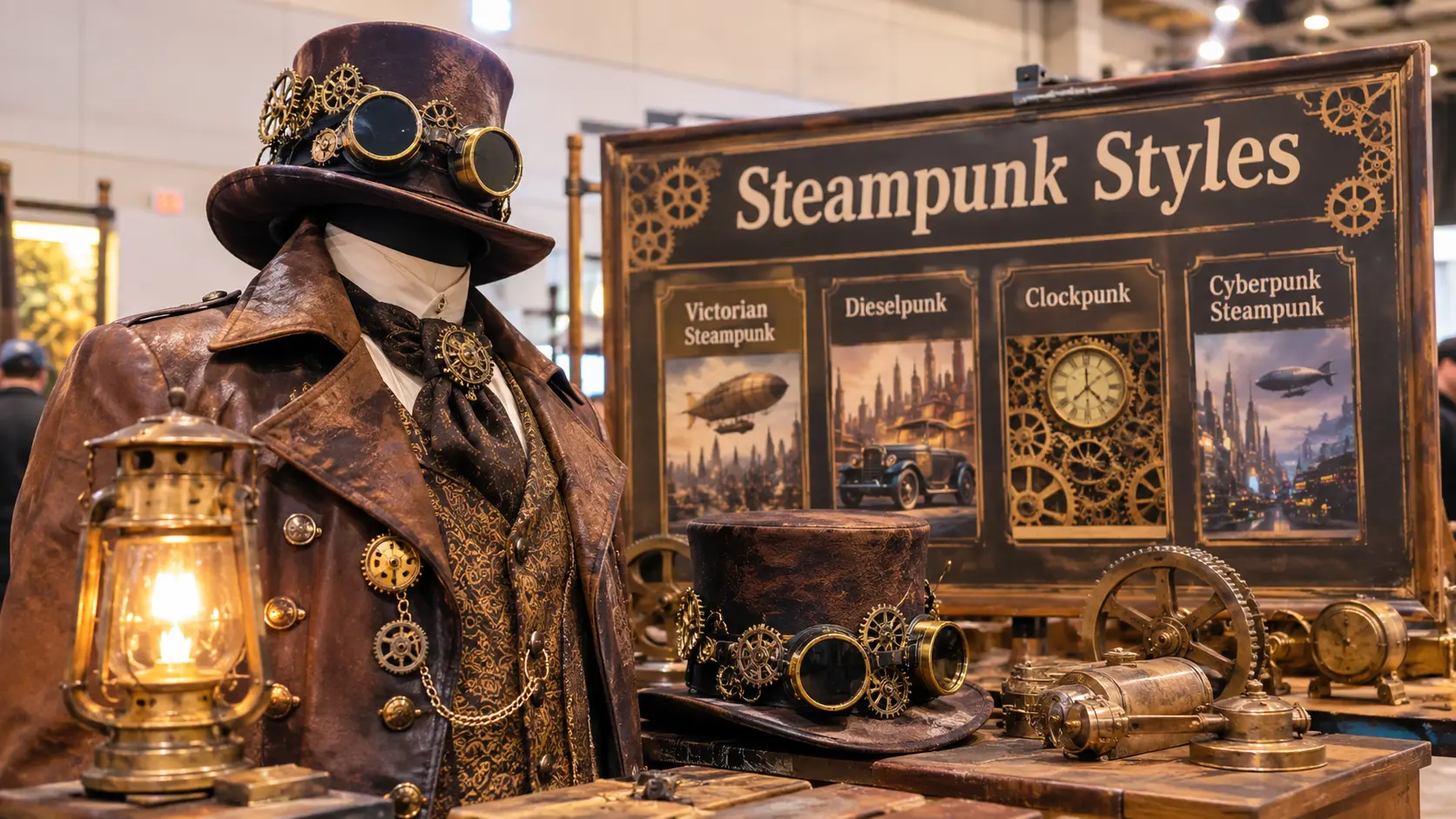
Have you ever imagined a world where Victorian elegance meets futuristic machinery, where brass gears replace modern gadgets, and where fashion looks like something straight out of an adventurous science-fiction movie? That’s the fascinating world of steampunk!
Steampunk is more than just a fashion trend. It’s a creative aesthetic that combines historical inspiration, mechanical inventions, fantasy, and imagination. From elegant Victorian dresses to rugged industrial outfits, there are countless ways to explore this distinctive look.
But what are the different styles of steampunk, and how do they differ from one another?
Whether you’re a beginner discovering this fascinating aesthetic or someone looking for fresh outfit inspiration, understanding its different variations can help you find a look that matches your personality.
Let’s explore 15 exciting steampunk styles, their defining characteristics, fashion elements, and what makes each one special.
What Is Steampunk? Understanding the Aesthetic
Steampunk is a creative genre and aesthetic inspired by the Victorian and Edwardian eras, particularly the technology, fashion, and industrial imagination associated with the nineteenth century.
Imagine a world where steam-powered machines never disappeared, mechanical computers became everyday inventions, and airships replaced modern airplanes. That’s the kind of alternative history that steampunk brings to life.
It combines old-fashioned elegance with imaginative technology. You might see someone wearing a Victorian waistcoat, leather boots, brass goggles, and a mechanical-looking accessory. Every detail contributes to the overall aesthetic.
Steampunk appears in fashion, literature, movies, artwork, interior design, cosplay, and even handmade crafts.
The Origins of Steampunk
The roots of steampunk can be traced to nineteenth-century science fiction and the works of authors such as
Jules Verne and
H. G. Wells.
Their stories explored extraordinary inventions, futuristic machines, scientific discoveries, and adventures in imaginative worlds.
The term “steampunk” emerged during the 1980s as writers began describing a particular type of speculative fiction that reimagined technology through a Victorian-inspired lens.
Over time, the concept expanded beyond books and became a recognizable visual and fashion movement.
What Makes Something Steampunk?
Several elements help define the steampunk aesthetic.
- Victorian inspiration: High collars, waistcoats, corsets, long coats, and vintage silhouettes.
- Mechanical details: Gears, clocks, cogs, pipes, and imaginative machinery.
- Industrial materials: Brass, copper, leather, iron, and aged metal.
- Vintage accessories: Pocket watches, goggles, hats, and decorative jewelry.
- Alternative technology: Fictional steam-powered inventions and mechanical devices.
The interesting part? There isn’t one strict formula. Steampunk gives you plenty of freedom to experiment with different influences.
15 Different Styles of Steampunk You Should Know
Steampunk isn’t limited to one particular appearance. Some styles focus on historical elegance, while others explore dark fantasy, industrial machinery, military influences, or adventurous storytelling.
Here are 15 fascinating variations worth exploring.
1. Victorian Steampunk
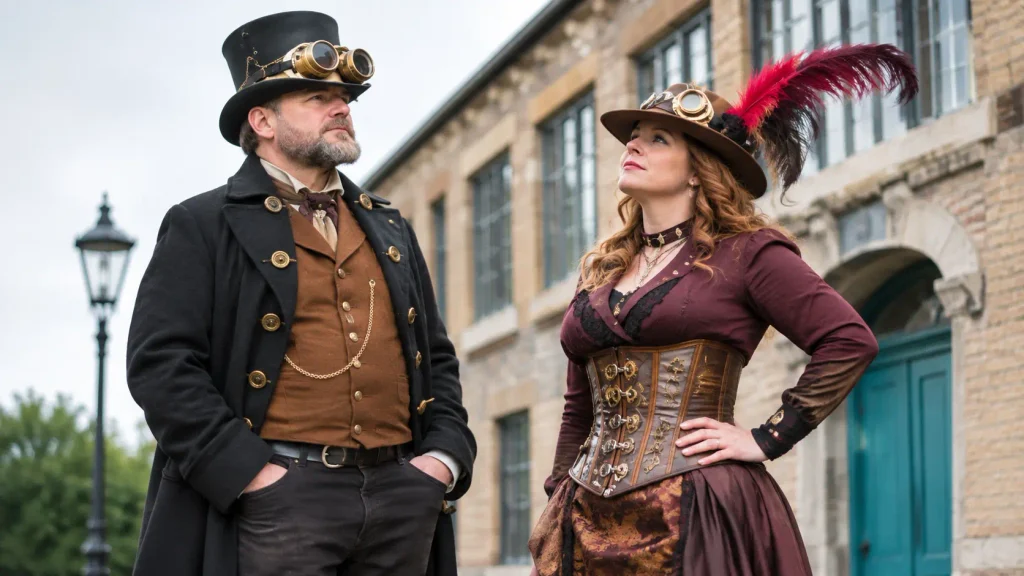
Victorian steampunk is perhaps the most recognizable interpretation of the entire aesthetic. It draws inspiration from nineteenth-century British fashion and combines traditional clothing with imaginative mechanical accessories.
For women, this style often includes corsets, long skirts, lace blouses, high-neck dresses, gloves, and decorative hats. Men commonly wear waistcoats, tailored trousers, frock coats, pocket watches, and leather boots.
Brass goggles and antique-looking accessories help complete the appearance.
The color palette usually includes brown, burgundy, cream, black, and antique gold.
Best for: Anyone who loves historical fashion, elegant outfits, and classic steampunk aesthetics.
2. Gothic Steampunk
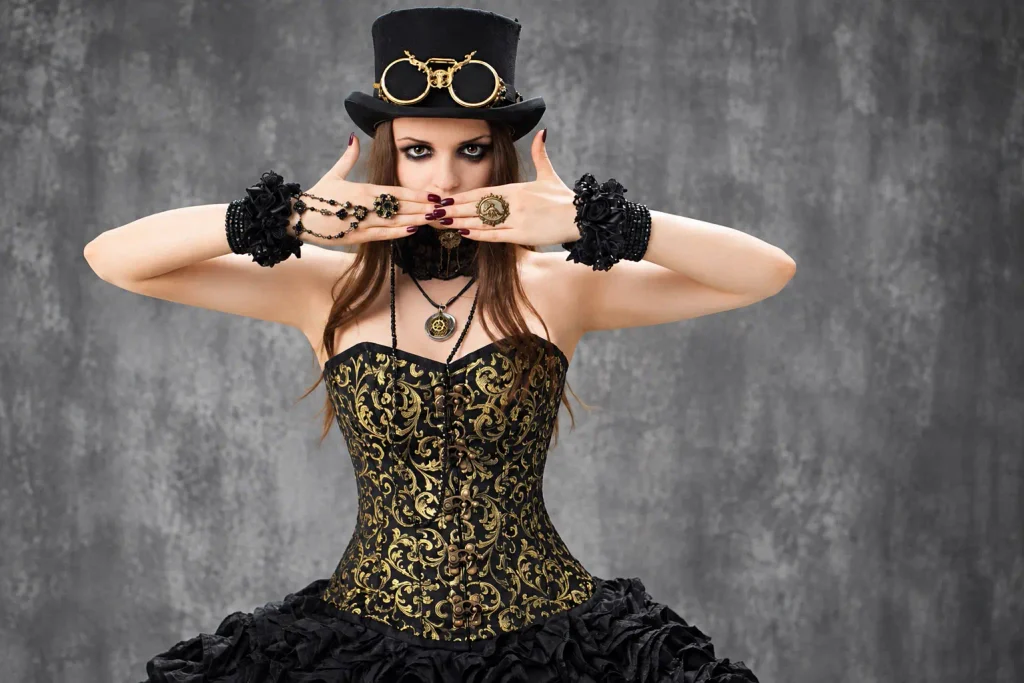
What happens when Victorian machinery meets dark Gothic fashion? You get Gothic steampunk!
This style combines the mysterious atmosphere of Gothic culture with the mechanical details of steampunk. Instead of bright brass and warm brown tones, it often features black, deep purple, dark red, and silver.
Typical outfits include dramatic coats, Victorian corsets, lace dresses, leather gloves, dark boots, and elaborate jewelry.
Accessories may feature antique keys, mechanical pendants, skull motifs, and intricate metal designs.
Gothic steampunk is perfect if you prefer a mysterious, dramatic, and slightly romantic appearance.
Best for: Fans of dark fashion, Gothic aesthetics, and mysterious fantasy worlds.
3. Industrial Steampunk
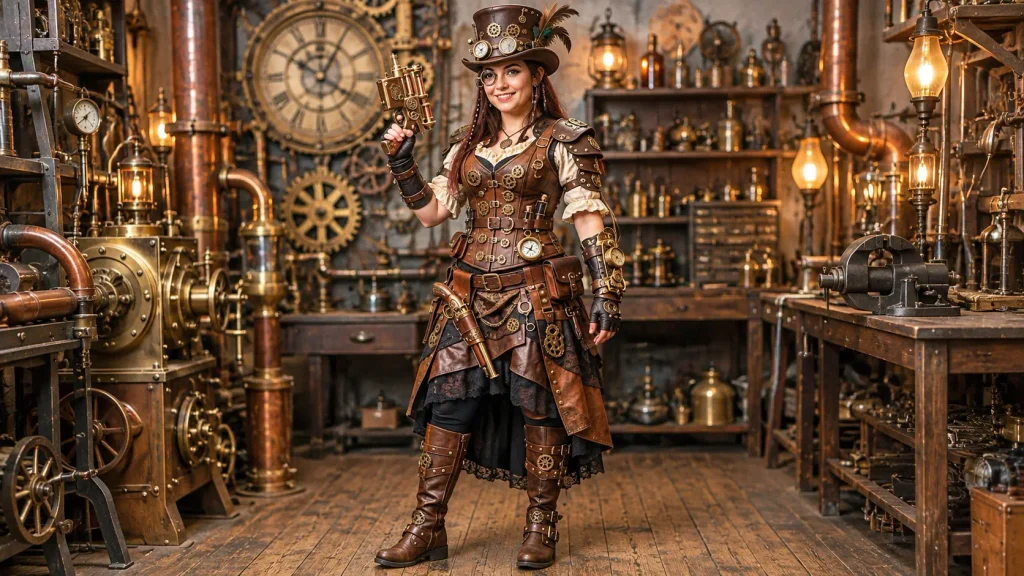
Industrial steampunk celebrates machinery, engineering, and the atmosphere of old factories.
Think exposed pipes, oversized gears, metal accessories, leather belts, and rugged clothing. This style takes inspiration from the Industrial Revolution and imagines a world where steam-powered technology dominates everyday life.
Clothing often includes work jackets, heavy boots, leather aprons, utility belts, and practical trousers.
Copper, iron, bronze, and weathered brown are common colors.
Unlike Victorian steampunk, which focuses heavily on elegance, industrial steampunk emphasizes functionality and mechanical creativity.
Best for: People who enjoy engineering, machinery, workshop aesthetics, and practical fashion.
4. Western Steampunk
Western steampunk blends the adventurous spirit of the American Old West with Victorian-inspired technology.
Imagine a cowboy carrying a mechanical pocket watch, wearing brass goggles, and traveling through a desert filled with steam-powered inventions.
That’s Western steampunk!
Common clothing includes cowboy hats, leather jackets, waistcoats, boots, bandanas, and decorative belts.
Accessories may include antique-looking revolver holsters as costume details, mechanical jewelry, and vintage goggles.
Earthy colors such as tan, rust, brown, and dark green dominate this style.
Best for: Western movie fans, adventure enthusiasts, and people who enjoy rugged vintage fashion.
5. Military Steampunk
Military steampunk takes inspiration from historical military uniforms and combines them with fictional mechanical technology.
It often features structured jackets, decorative buttons, military-inspired coats, tall boots, shoulder details, and leather accessories.
The overall appearance is organized, formal, and powerful.
Common colors include navy blue, olive green, burgundy, black, and antique gold.
Some designs also include fictional mechanical armor, elaborate insignias, and decorative technological devices.
Military steampunk is especially popular in cosplay because it offers plenty of opportunities for detailed costume design.
Best for: People who appreciate historical uniforms, structured fashion, and elaborate costume details.
6. Romantic Steampunk
Romantic steampunk focuses on beauty, elegance, and vintage charm.
This variation combines traditional Victorian romance with mechanical accessories and imaginative details. It creates a softer appearance compared with industrial or Gothic steampunk.
Women might wear flowing skirts, lace blouses, decorative corsets, floral patterns, and elegant gloves. Men may choose tailored waistcoats, long coats, and vintage-inspired shirts.
The color palette often features cream, dusty rose, burgundy, champagne, and soft brown.
Small accessories such as pocket watches, antique brooches, and delicate mechanical jewelry add a distinctive touch.
Best for: Anyone who prefers elegant, feminine, vintage-inspired, and romantic outfits.
7. Nautical Steampunk
Nautical steampunk takes inspiration from historic ships, submarines, maritime exploration, and imaginative ocean technology.
It creates the impression of a world where steam-powered vessels explore mysterious oceans and underwater civilizations.
Typical clothing includes captain-style coats, sailor-inspired shirts, leather boots, waistcoats, and decorative maritime accessories.
Compasses, old maps, brass instruments, anchors, and mechanical navigation devices are common design elements.
Navy blue, sea green, brown, copper, and cream are popular colors.
Best for: Ocean lovers, adventure enthusiasts, and fans of exploration-themed fashion.
8. Adventure Steampunk
Adventure steampunk is all about exploration, discovery, and imaginative journeys.
Picture an explorer traveling through forgotten cities, mysterious jungles, and ancient ruins while carrying mechanical gadgets and vintage equipment.
This style usually includes practical clothing such as leather jackets, utility vests, fitted trousers, boots, and explorer-inspired hats.
Goggles, maps, compasses, binocular-style accessories, and leather bags complete the appearance.
Unlike romantic steampunk, adventure steampunk focuses more on practicality and storytelling.
Best for: Travelers, explorers, cosplay enthusiasts, and people who love adventurous aesthetics.
9. Dieselpunk
Dieselpunk is closely related to steampunk, but its inspiration comes from a different historical period.
While steampunk generally looks toward the Victorian era and steam-powered technology, dieselpunk takes inspiration from the early twentieth century, especially the 1920s through the 1940s.
Its aesthetic includes vintage aviation clothing, industrial machinery, retro-futuristic vehicles, and art deco influences.
Typical outfits feature leather jackets, military-inspired coats, vintage hats, and structured silhouettes.
The colors often include charcoal, olive, brown, bronze, and dark red.
Best for: Fans of retro-futurism, vintage aviation, and early twentieth-century design.
10. Clockpunk
Clockpunk is another fascinating alternative-history aesthetic that focuses on clockwork technology.
Instead of relying primarily on steam engines, clockpunk imagines advanced machines powered by springs, gears, mechanical movements, and intricate clock mechanisms.
Its visual appearance often includes exposed gears, rotating components, elaborate timepieces, brass mechanisms, and detailed mechanical accessories.
Fashion can overlap with Renaissance and Victorian influences, depending on the particular design.
Clockpunk is especially interesting for people who enjoy intricate craftsmanship and mechanical artwork.
Best for: Watch enthusiasts, mechanical designers, and fans of detailed fictional inventions.
11. Gaslamp Fantasy
Gaslamp fantasy blends Victorian-inspired settings with supernatural elements, mystery, and fantasy storytelling.
It often features foggy streets, antique lanterns, mysterious mansions, magical discoveries, and unusual characters.
Although it overlaps with steampunk, gaslamp fantasy places greater emphasis on atmosphere, supernatural themes, and historical fantasy.
Clothing may include long Victorian coats, formal dresses, waistcoats, gloves, and vintage accessories.
The overall aesthetic often feels mysterious, atmospheric, and slightly magical.
Best for: Fans of Victorian fantasy, supernatural fiction, and mysterious historical settings.
12. Neo-Victorian Steampunk
Neo-Victorian steampunk brings traditional Victorian inspiration into a more contemporary setting.
Rather than recreating historical clothing exactly, it combines vintage silhouettes with modern fashion choices.
For example, someone might wear a traditional corset with modern trousers or combine a Victorian-inspired jacket with contemporary boots.
The style can be subtle or highly decorative, depending on personal preference.
Modern materials, updated cuts, and contemporary accessories make this aesthetic easier to incorporate into everyday outfits.
Best for: People who love vintage fashion but want a modern and wearable appearance.
13. Post-Apocalyptic Steampunk
Post-apocalyptic steampunk imagines a world where civilization has collapsed and people rely on repaired machinery, handmade inventions, and recycled materials.
The clothing often looks worn, distressed, and heavily customized.
Common elements include weathered leather jackets, patched trousers, rough fabrics, utility belts, metal decorations, and protective-looking goggles.
Rusty brown, charcoal, dusty beige, and dark olive are popular colors.
The beauty of this style comes from its imperfect appearance. Every accessory can look like it has a story behind it.
Best for: Fans of survival fiction, dystopian worlds, and experimental costume design.
14. Fairy Steampunk
Fairy steampunk combines magical fantasy with mechanical creativity.
Imagine delicate wings made from brass-colored materials, floral decorations mixed with tiny gears, and beautiful dresses featuring imaginative mechanical details.
This style often uses pastel colors, copper, cream, pale green, and soft gold.
Outfits may include flowing skirts, decorative corsets, lace, fantasy-inspired wings, and intricate jewelry.
It creates a wonderful balance between nature and machinery.
Fairy steampunk is especially popular in fantasy cosplay, costume photography, and handmade fashion projects.
Best for: Fantasy lovers, creative designers, and people who enjoy whimsical fashion.
15. Cyberpunk-Inspired Steampunk
Cyberpunk-inspired steampunk combines the mechanical beauty of traditional steampunk with futuristic visual influences.
Traditional steampunk tends to favor brass machinery, vintage clothing, and steam-powered inventions. Cyberpunk, on the other hand, often explores advanced technology, neon lighting, artificial intelligence, and futuristic urban environments.
When these aesthetics come together, the result is a distinctive combination of old-world machinery and futuristic design.
You might see Victorian-inspired clothing paired with glowing accessories, metallic details, modern materials, and imaginative technological elements.
Best for: Fans of science fiction, futuristic fashion, and experimental design.
What Are the Main Elements of Steampunk Fashion?
Now that you’ve explored the different styles of steampunk, let’s look at the details that bring these aesthetics together.
Although each variation has its own personality, many share similar fashion elements.
Clothing and Victorian-Inspired Outfits
Clothing is one of the most important parts of steampunk fashion.
Popular choices include:
- Corsets and long Victorian dresses.
- Waistcoats and tailored jackets.
- High-collar shirts and lace blouses.
- Long coats and decorative capes.
- Leather trousers and vintage skirts.
- Lace-up boots and formal footwear.
You don’t need to wear an elaborate costume to create a steampunk-inspired outfit. Even a simple waistcoat paired with a vintage accessory can communicate the aesthetic.
Accessories and Mechanical Details
Accessories help transform ordinary vintage clothing into something unmistakably steampunk.
Some popular choices include:
- Brass or copper goggles.
- Antique pocket watches.
- Decorative gears and cogs.
- Leather belts and harness-inspired accessories.
- Vintage hats and top hats.
- Mechanical-looking jewelry.
- Compass-inspired pendants.
- Decorative keys and miniature tools.
The trick is to choose accessories that complement your outfit instead of overwhelming it.
Colors, Materials, and Textures
Steampunk fashion is famous for its warm, aged, and industrial appearance.
Common colors include:
- Brown: Creates a vintage leather appearance.
- Bronze: Adds an antique mechanical feeling.
- Copper: Brings warmth and industrial character.
- Gold: Creates a luxurious Victorian touch.
- Black: Adds contrast and dramatic depth.
- Burgundy: Provides a rich historical appearance.
- Cream: Softens darker outfits and adds elegance.
Leather, lace, velvet, cotton, metal, and textured fabrics are commonly used to create interesting combinations.
How to Choose the Right Steampunk Style
With so many variations available, choosing one can feel overwhelming. Should you go Gothic, Victorian, industrial, or adventurous?
The good news is that there isn’t a wrong answer. Your ideal style depends on your personality, interests, and fashion preferences.
Consider Your Personality
Start by thinking about the appearance you naturally enjoy.
- Love elegance and vintage fashion? Try Victorian steampunk.
- Prefer mysterious outfits? Explore Gothic steampunk.
- Enjoy machinery and engineering? Industrial steampunk may suit you.
- Love exploration and travel? Adventure steampunk is worth trying.
- Prefer magical designs? Consider fairy steampunk.
Your personal interests can help you narrow down the options.
Mix Different Steampunk Aesthetics
One of the best things about steampunk is that you don’t have to follow only one variation.
You can combine different influences to create something original.
For example, try pairing a Victorian waistcoat with industrial leather accessories. Alternatively, combine Gothic clothing with mechanical jewelry or add nautical accessories to an explorer-inspired outfit.
Think of steampunk as a creative playground rather than a strict fashion rulebook.
Start With Simple Clothing and Accessories
You don’t need an expensive costume to get started.
Begin with a few basic items, such as a vintage-inspired shirt, brown leather boots, a waistcoat, and brass-colored accessories.
Once you understand the overall aesthetic, you can gradually add more detailed pieces.
This approach makes it easier to experiment without spending too much money.
Steampunk vs. Other Alternative Fashion Styles
Steampunk shares certain elements with other alternative fashion movements, but each has a distinct identity.
| Style | Main Inspiration | Defining Features |
| Steampunk | Victorian era | Brass gears, steam technology |
| Dieselpunk | 1920s–1940s | Art deco, diesel machinery |
| Cyberpunk | Futuristic society | Neon, digital technology |
| Gothic | Dark romantic culture | Black clothing, dramatic details |
| Clockpunk | Mechanical clockwork | Gears, springs, timepieces |
| Gaslamp Fantasy | Victorian fantasy | Mystery, magic, historical settings |
The biggest difference is the world each aesthetic imagines.
Steampunk focuses on alternative historical technology, while cyberpunk explores futuristic societies and digital advancements.
Dieselpunk looks toward a later industrial period, and Gothic fashion focuses more heavily on dark romantic expression.
Understanding these differences can help you develop a more distinctive personal style.
Why Is Steampunk Still Popular Today?
Steampunk continues to attract people because it offers something different from ordinary fashion and modern design.
First, it encourages creativity. You can experiment with clothing, accessories, handmade inventions, and unusual combinations without following strict rules.
Second, it has a strong connection to storytelling. A steampunk outfit can make you look like an explorer, inventor, airship captain, scientist, or mysterious traveler.
Third, the aesthetic combines two interesting worlds: historical craftsmanship and futuristic imagination.
Steampunk also has a presence in cosplay, conventions, themed events, photography, literature, and creative communities.
Perhaps its biggest attraction is that it allows people to express their individuality. You aren’t simply wearing an outfit; you’re creating a character and imagining a different world.
Conclusion
The different styles of steampunk offer an exciting way to explore fashion, history, fantasy, and mechanical creativity. From elegant Victorian steampunk and mysterious Gothic designs to rugged industrial outfits and imaginative fairy aesthetics, every variation brings something unique to the table.
Whether you prefer vintage elegance, dark fashion, adventurous clothing, or futuristic mechanical details, there’s a steampunk aesthetic worth exploring.
The best part is that you don’t have to limit yourself to one category. Experiment with different colors, materials, accessories, and historical influences to develop a look that feels genuinely yours.
After all, steampunk is about imagination. The more creatively you approach it, the more interesting your personal style can become.
FAQs
Q1. What is the most popular style of steampunk?
Victorian steampunk is generally considered the most recognizable and widely associated style. It features traditional Victorian clothing, brass accessories, leather details, pocket watches, and mechanical-inspired designs. However, Gothic and industrial steampunk are also popular variations.
Q2. What are the main colors used in steampunk fashion?
The most common steampunk colors include brown, bronze, copper, antique gold, black, burgundy, cream, and dark green. These shades create an aged, vintage, and industrial appearance inspired by historical machinery and Victorian fashion.
Q3. Is steampunk always based on Victorian fashion?
No. Although Victorian fashion is a major influence, steampunk also includes industrial, Western, nautical, Gothic, military, and futuristic-inspired variations. Some styles focus more on mechanical inventions and alternative technology than traditional historical clothing.
Q4. Can you mix different styles of steampunk?
Absolutely! Mixing different steampunk influences is a great way to create a unique appearance. For example, you can combine Victorian clothing with Gothic accessories or pair industrial leather pieces with nautical-inspired details. There are no strict rules about combining these aesthetics.
Q5. What is the difference between steampunk and dieselpunk?
Steampunk generally takes inspiration from Victorian-era technology and imagines a world powered by steam engines and mechanical inventions. Dieselpunk focuses more on the 1920s to 1940s, featuring diesel-powered machinery, aviation influences, art deco designs, and retro-futuristic technology.